 Made in India

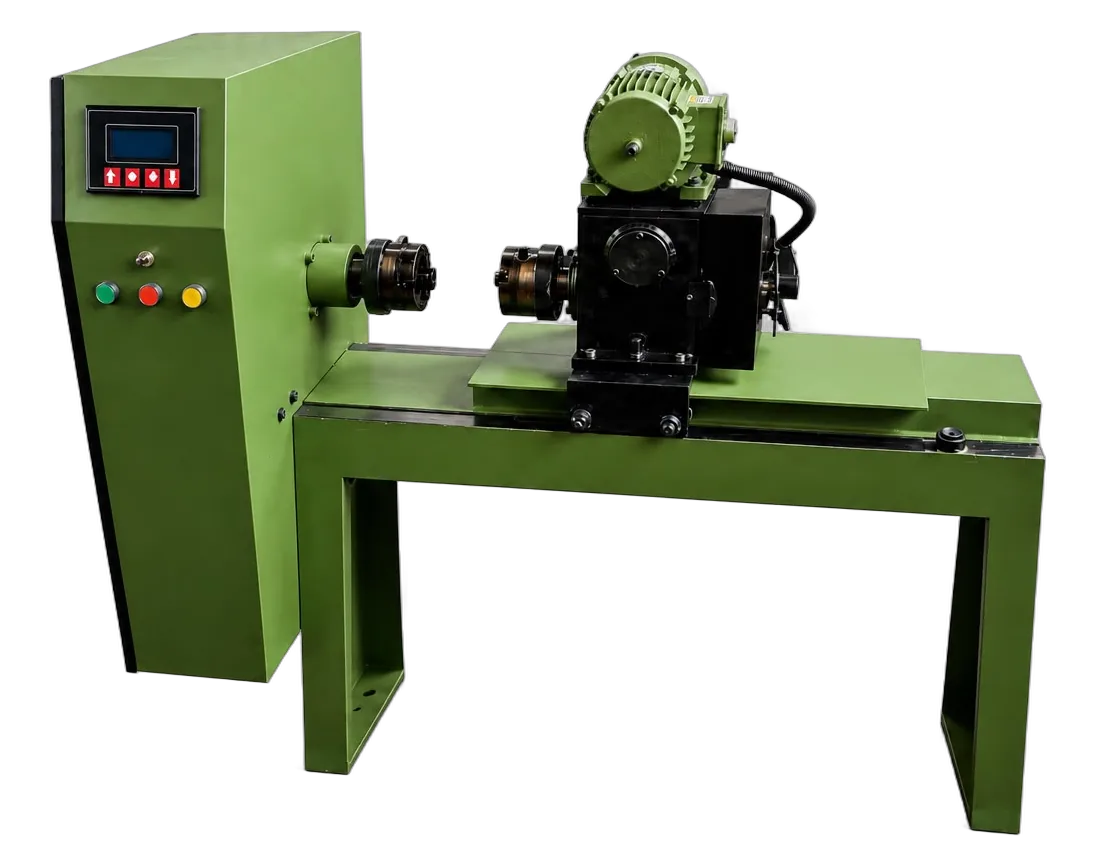
ETS-TTM-6(E)
Digital Torsion Testing Machine, 60 Nm
ETS-TTM-6(E)
Motorised torsion testing machine of 60 Nm capacity with digital torque and angle-of-rotation indication on a 20×4 LCD, unit selection in kgf·m or N·m, and storage of results with date and time for CSV export over USB. The smallest of the TTM series, with 0.006 Nm least count, it is intended for wires, thin rods and small fasteners.
The ETS-TTM-6(E) is the smallest machine in the digital torsion testing series from Eklavya Techno Solutions, Ichalkaranji, India, with a 60 Nm torque capacity and a least count of 0.006 Nm. It is built for wire, thin rods and small fasteners: a torsion test twists the specimen about its own axis at a controlled speed while the machine records torque and angle of rotation, which reveals the shear strength, ductility and any surface or internal defects of the material. Wire producers use it for the number of twists to failure, fastener makers for torsional strength, and laboratories for shear modulus.
The specimen is clamped between round grips for 4 to 12 mm diameters or flat grips for 1 to 5 mm thick, 25 mm wide strips, with a sliding tailstock that adjusts to any length up to 420 mm. A 0.5 HP motor drives the rotation at 1.5 rpm. Torque, in kgf.m or N.m, and angle are displayed live on a 20x4 LCD, and each result is stored with date and time for CSV export over USB or reporting in the PC software. The TTM-6 runs on 400 to 440 V three-phase and is used for tests to ASTM E143 and IS 1717.
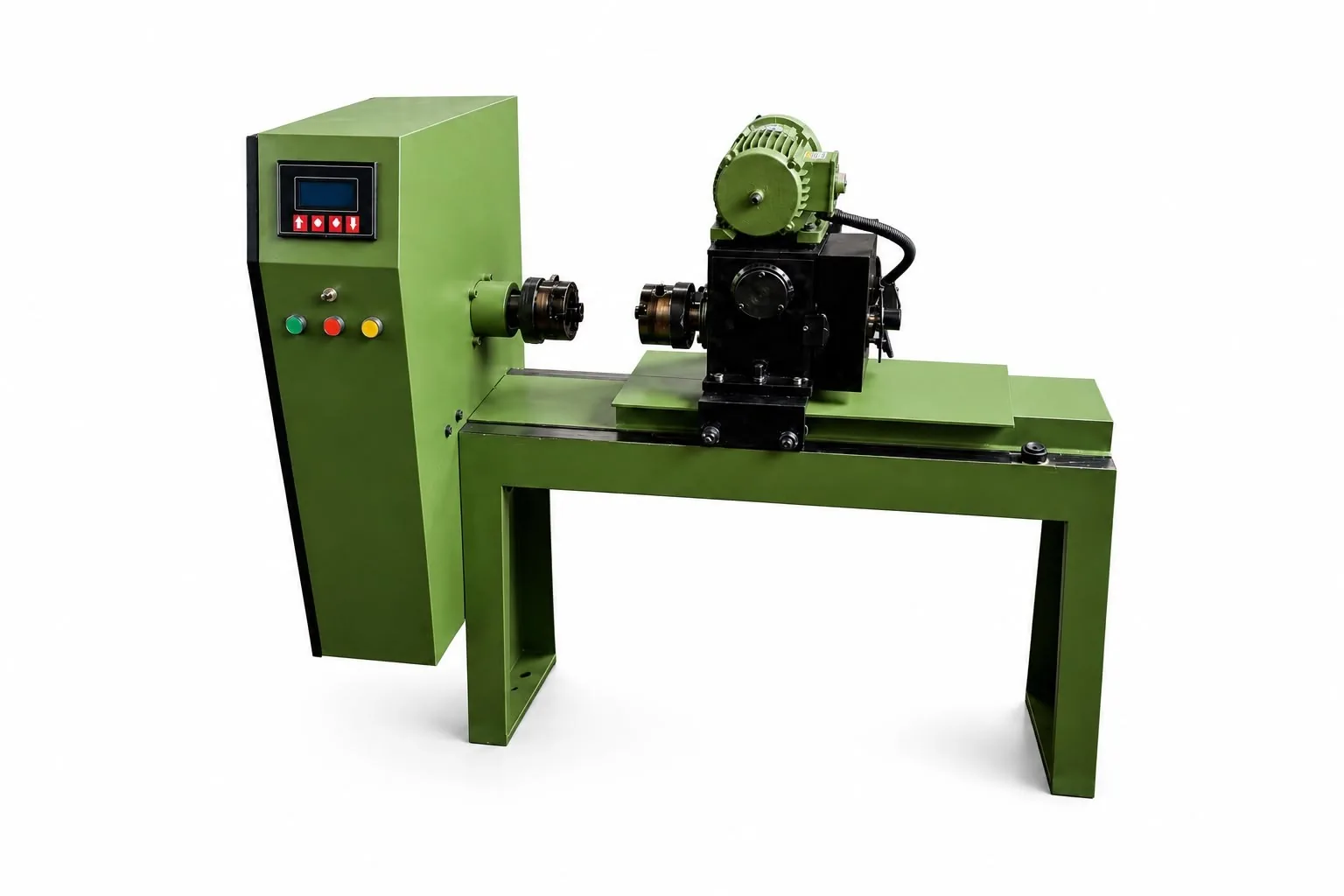
Max. torque capacity: 60 Nm
ASTM E143 – ASTM International standard for materials testing
IS 1717 – Indian Standard for materials testing
ETS-TTM series (digital torsion): models compared side by side, current model highlighted.
| Parameter | ETS-TTM-6(E) | ETS-TTM-10(E) | ETS-TTM-20(E) | ETS-TTM-50(E) | ETS-TTM-100(E) | ETS-TTM-200(E) |
|---|---|---|---|---|---|---|
| Type | Digital torsion testing machine, motorised | Digital torsion testing machine, motorised | Digital torsion testing machine, motorised | Digital torsion testing machine, motorised | Digital torsion testing machine, motorised | Digital torsion testing machine, motorised |
| Max. torque capacity | 60 Nm | 100 Nm | 200 Nm | 500 Nm | 1000 Nm | 2000 Nm |
| Least count | 0.006 Nm | 0.01 Nm | 0.02 Nm | 0.05 Nm | 0.01 Nm | 0.02 Nm |
| Torsion speed | 1.5 rpm | 1.5 rpm | 1.5 rpm | 0.5 rpm | 0.5 rpm | 0.5 rpm |
| Clearance between grips | 0–420 mm | 0–420 mm | 0–420 mm | 0–500 mm | 0–600 mm | 0–1000 mm |
| Round specimen grips | 4–8, 8–12 mm | 4–8, 8–12 mm | 7–10, 10–15, 15–20 mm | 10–17, 17–24, 24–30 mm | 10–18, 18–26, 26–34 mm | 20–30, 30–40, 40–50 mm |
| Flat specimen grips (thickness, width) | 1–5 mm, 25 mm | 2–8 mm, 25 mm | 3–10 mm, 30 mm | 5–12 mm, 40 mm | 5–15 mm, 50 mm | 10–20 mm, 60 mm |
| Display | 20×4 LCD, torque in kgf·m or N·m and angle of rotation | 20×4 LCD, torque in kgf·m or N·m and angle of rotation | 20×4 LCD, torque in kgf·m or N·m and angle of rotation | 20×4 LCD, torque in kgf·m or N·m and angle of rotation | 20×4 LCD, torque in kgf·m or N·m and angle of rotation | 20×4 LCD, torque in kgf·m or N·m and angle of rotation |
| Output | USB (CSV), PC software | USB (CSV), PC software | USB (CSV), PC software | USB (CSV), PC software | USB (CSV), PC software | USB (CSV), PC software |
| Motor | 0.5 HP | 0.5 HP | 0.5 HP | 0.5 HP | 1 HP | 1 HP |
| Power supply | 400–440 V, 3 phase, 50 Hz | 400–440 V, 3 phase, 50 Hz | 400–440 V, 3 phase, 50 Hz | 400–440 V, 3 phase, 50 Hz | 400–440 V, 3 phase, 50 Hz | 400–440 V, 3 phase, 50 Hz |
The specimen is gripped at both ends and one end is rotated at a constant speed while the machine measures the torque and the angle of twist. From the torque-angle curve you obtain torsional yield and ultimate shear strength, the shear modulus per ASTM E143, and the number of twists to failure, which for wire under IS 1717 is a sensitive check of ductility and surface soundness.
Round specimens of 4 to 8 mm and 8 to 12 mm diameter in the supplied grips, flat specimens 1 to 5 mm thick and up to 25 mm wide, and lengths up to 420 mm between grips using the sliding tailstock. With 60 Nm capacity it is meant for wire, thin rods, small screws and pins; larger rods and fasteners need the TTM-10 or TTM-20.
The TTM series runs from 60 Nm to 2000 Nm in six capacities. The TTM-6 and TTM-10 share 4 to 12 mm grips and 1.5 rpm; the TTM-20 takes 7 to 20 mm rounds; the TTM-50, 100 and 200 turn at 0.5 rpm with longer beds and grips up to 50 mm. The least count scales with capacity, so pick the smallest machine that covers your maximum torque.
A 20x4 LCD shows torque, selectable in kgf.m or N.m, and the angle of rotation live during the test. Each result is stored with date and time and exported as a CSV file over USB for Excel, or handled in the ETS PC software for reports and printing. The panel lets you zero torque and angle before each test.
The machine is used for shear modulus determination to ASTM E143 and for the simple torsion test of wire to IS 1717, and its torque measuring system is verified at installation. ETS commissions the machine on site anywhere in India; it needs a 400 to 440 V three-phase, 50 Hz supply for its 0.5 HP drive.