 Made in India

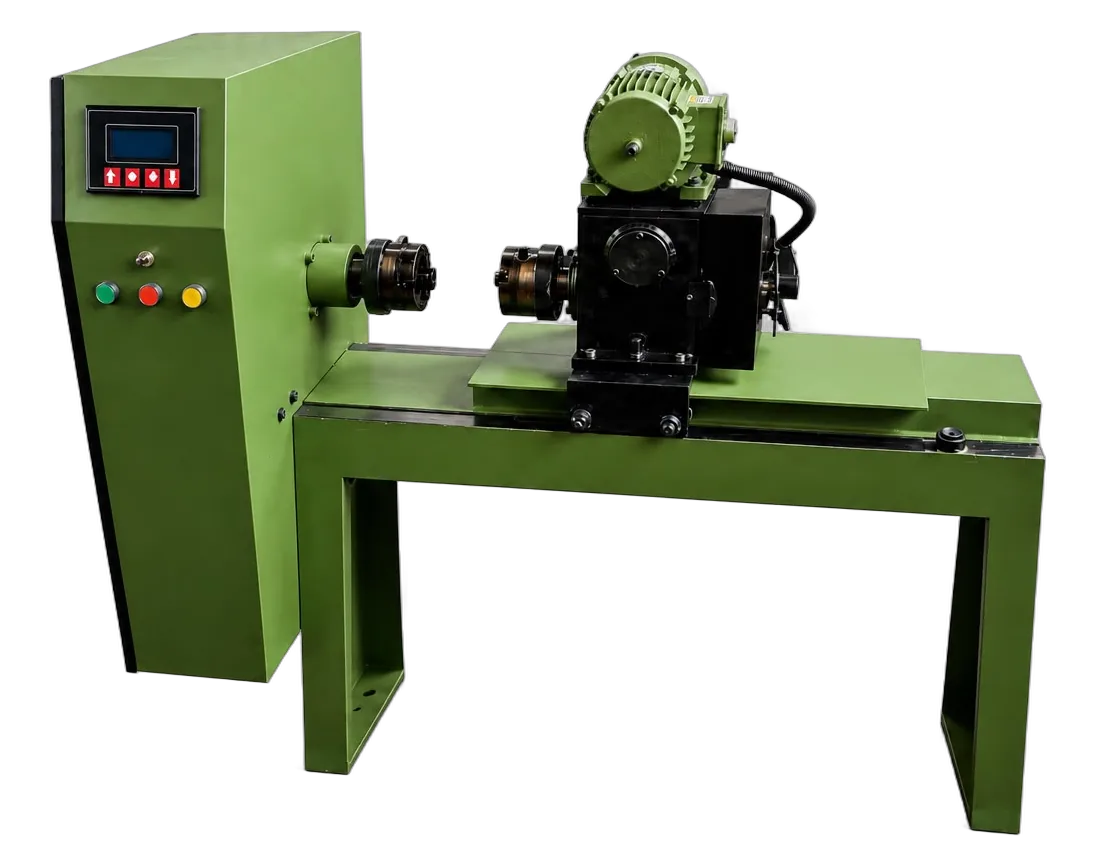
ETS-TTM-20(E)
Digital Torsion Testing Machine, 200 Nm
ETS-TTM-20(E)
Motorised torsion testing machine of 200 Nm capacity with digital torque and angle-of-rotation indication on a 20×4 LCD, unit selection in kgf·m or N·m, and storage of results with date and time for CSV export over USB. The mid-range TTM-20 takes 7 to 20 mm round and 3 to 10 mm flat specimens, typically rods and fasteners.
The ETS-TTM-20(E) is the mid-range digital torsion testing machine from Eklavya Techno Solutions, Ichalkaranji, India, with 200 Nm capacity and a least count of 0.02 Nm. It moves up from the wire-sized TTM-6 and TTM-10 to rods and fasteners: the round grips take 7 to 10, 10 to 15 and 15 to 20 mm diameters, the flat grips 3 to 10 mm thick and 30 mm wide strips, and the sliding tailstock adjusts to lengths up to 420 mm. A 0.5 HP motor turns the specimen at 1.5 rpm while torque and angle of rotation are recorded to give torsional strength, shear modulus and ductility.
The TTM-20 is the usual choice for automotive component suppliers testing bolts, studs and small shafts, for bar and bright-bar producers, and for engineering colleges that need a torsion machine for the full range of laboratory specimens. Torque, in kgf.m or N.m, and angle are shown live on a 20x4 LCD and can be zeroed before each test; every result is stored with date and time for CSV export over USB or reporting in the PC software. The machine runs on 400 to 440 V three-phase and is used for tests to ASTM E143 and IS 1717.
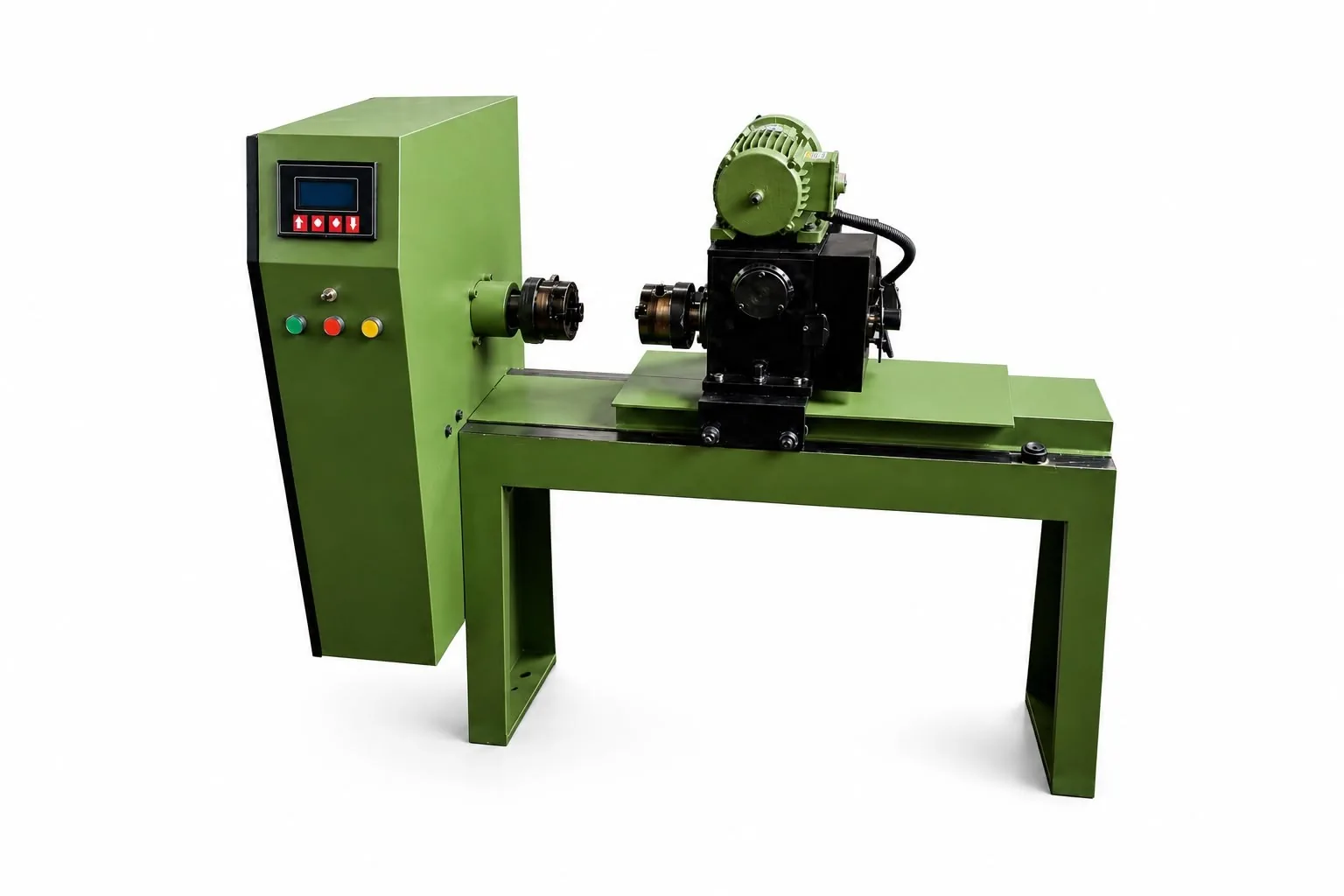
Max. torque capacity: 200 Nm
ASTM E143 – ASTM International standard for materials testing
IS 1717 – Indian Standard for materials testing
ETS-TTM series (digital torsion): models compared side by side, current model highlighted.
| Parameter | ETS-TTM-6(E) | ETS-TTM-10(E) | ETS-TTM-20(E) | ETS-TTM-50(E) | ETS-TTM-100(E) | ETS-TTM-200(E) |
|---|---|---|---|---|---|---|
| Type | Digital torsion testing machine, motorised | Digital torsion testing machine, motorised | Digital torsion testing machine, motorised | Digital torsion testing machine, motorised | Digital torsion testing machine, motorised | Digital torsion testing machine, motorised |
| Max. torque capacity | 60 Nm | 100 Nm | 200 Nm | 500 Nm | 1000 Nm | 2000 Nm |
| Least count | 0.006 Nm | 0.01 Nm | 0.02 Nm | 0.05 Nm | 0.01 Nm | 0.02 Nm |
| Torsion speed | 1.5 rpm | 1.5 rpm | 1.5 rpm | 0.5 rpm | 0.5 rpm | 0.5 rpm |
| Clearance between grips | 0–420 mm | 0–420 mm | 0–420 mm | 0–500 mm | 0–600 mm | 0–1000 mm |
| Round specimen grips | 4–8, 8–12 mm | 4–8, 8–12 mm | 7–10, 10–15, 15–20 mm | 10–17, 17–24, 24–30 mm | 10–18, 18–26, 26–34 mm | 20–30, 30–40, 40–50 mm |
| Flat specimen grips (thickness, width) | 1–5 mm, 25 mm | 2–8 mm, 25 mm | 3–10 mm, 30 mm | 5–12 mm, 40 mm | 5–15 mm, 50 mm | 10–20 mm, 60 mm |
| Display | 20×4 LCD, torque in kgf·m or N·m and angle of rotation | 20×4 LCD, torque in kgf·m or N·m and angle of rotation | 20×4 LCD, torque in kgf·m or N·m and angle of rotation | 20×4 LCD, torque in kgf·m or N·m and angle of rotation | 20×4 LCD, torque in kgf·m or N·m and angle of rotation | 20×4 LCD, torque in kgf·m or N·m and angle of rotation |
| Output | USB (CSV), PC software | USB (CSV), PC software | USB (CSV), PC software | USB (CSV), PC software | USB (CSV), PC software | USB (CSV), PC software |
| Motor | 0.5 HP | 0.5 HP | 0.5 HP | 0.5 HP | 1 HP | 1 HP |
| Power supply | 400–440 V, 3 phase, 50 Hz | 400–440 V, 3 phase, 50 Hz | 400–440 V, 3 phase, 50 Hz | 400–440 V, 3 phase, 50 Hz | 400–440 V, 3 phase, 50 Hz | 400–440 V, 3 phase, 50 Hz |
Steel rods and bright bars from 7 to 20 mm, bolts, studs and small shafts, and flat specimens up to 10 mm thick and 30 mm wide. A 16 mm mild-steel rod, for example, yields in torsion well within 200 Nm, and the 0.02 Nm least count still resolves the elastic slope for shear modulus. Thicker bars and larger fasteners move up to the TTM-50.
The TTM-10 is 100 Nm with 4 to 12 mm grips on the same 420 mm bed and 1.5 rpm speed. The TTM-20 is 200 Nm with 7 to 20 mm grips. The TTM-50 jumps to 500 Nm, 10 to 30 mm grips, a 500 mm bed and a slower 0.5 rpm for larger specimens. Capacity, grip range and least count all scale together.
Torque, shown in kgf.m or N.m, and angle of rotation, both displayed live on the 20x4 LCD until the specimen fails. From these you derive torsional yield and ultimate shear strength, shear modulus per ASTM E143 and the number of twists to failure per IS 1717 for wire and rod. Results are stored with date and time.
Every test result is stored with date and time in the machine and exported as a CSV file over USB, which opens in Excel for plotting the torque-angle curve. The ETS PC software provides reporting and printing. Torque and angle can be zeroed on the panel before each test for clean records.
The TTM-20 is used for tests to ASTM E143 and IS 1717 and its torque measuring system is verified at installation, with ETS commissioning the machine on site across India. The 0.5 HP motorised drive runs on a 400 to 440 V, three-phase, 50 Hz supply.