 Made in India

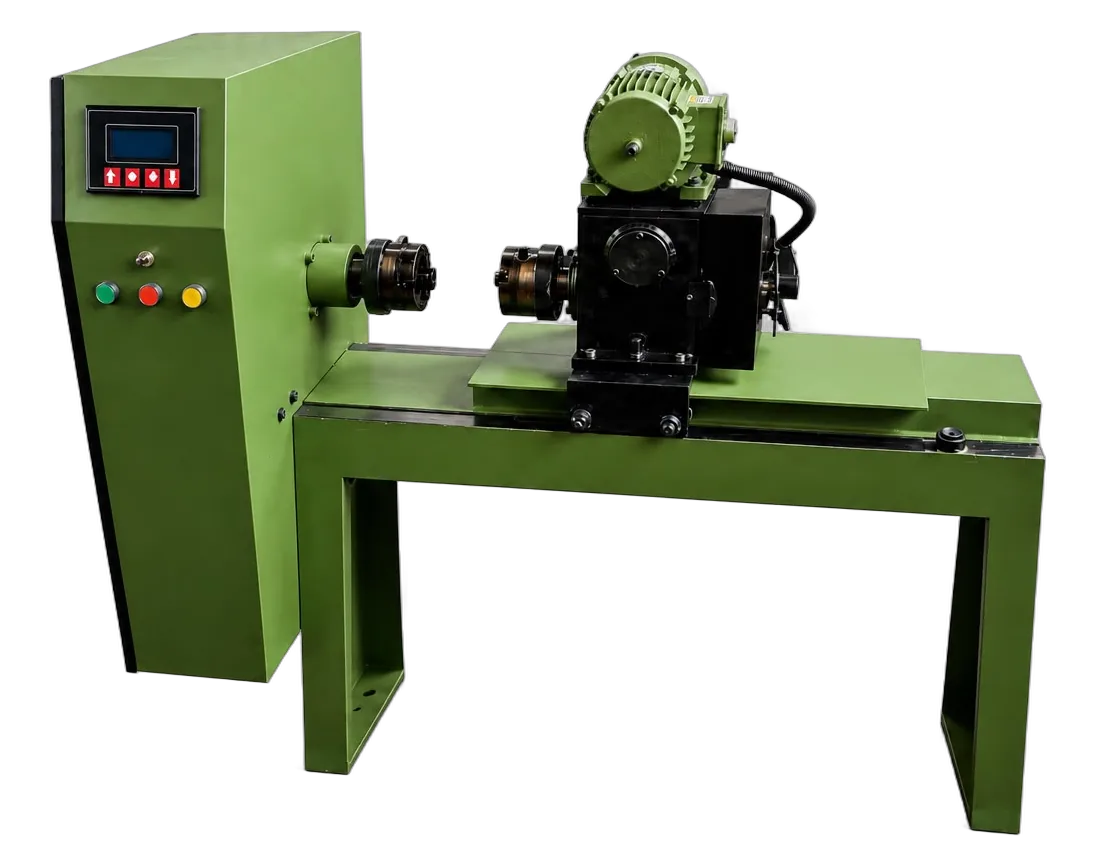
ETS-TTM-10(E)
Digital Torsion Testing Machine, 100 Nm
ETS-TTM-10(E)
Motorised torsion testing machine of 100 Nm capacity with digital torque and angle-of-rotation indication on a 20×4 LCD, unit selection in kgf·m or N·m, and storage of results with date and time for CSV export over USB. With 0.01 Nm least count and 4 to 12 mm round grips it suits wires, thin rods and small fasteners.
The ETS-TTM-10(E) is a 100 Nm digital torsion testing machine from Eklavya Techno Solutions, Ichalkaranji, India, with a least count of 0.01 Nm. It shares the compact bed of the TTM-6, with round grips for 4 to 12 mm diameters, flat grips for 2 to 8 mm thick and 25 mm wide strips, a sliding tailstock for lengths up to 420 mm and a 0.5 HP drive turning at 1.5 rpm, but offers a higher torque ceiling for thicker wire, small bars and fasteners. In a torsion test the specimen is twisted about its axis at constant speed while torque and angle of rotation are recorded, giving shear strength, shear modulus, ductility and a sensitive indication of surface and internal defects.
The TTM-10 suits wire and cable producers, fastener manufacturers, spring makers and college strength-of-materials laboratories. Torque, in kgf.m or N.m, and angle are shown live on a 20x4 LCD, torque and angle can be zeroed before each test, and every result is stored with date and time for CSV export over USB or reporting in the PC software. The machine runs on 400 to 440 V three-phase and is used for tests to ASTM E143 and IS 1717.
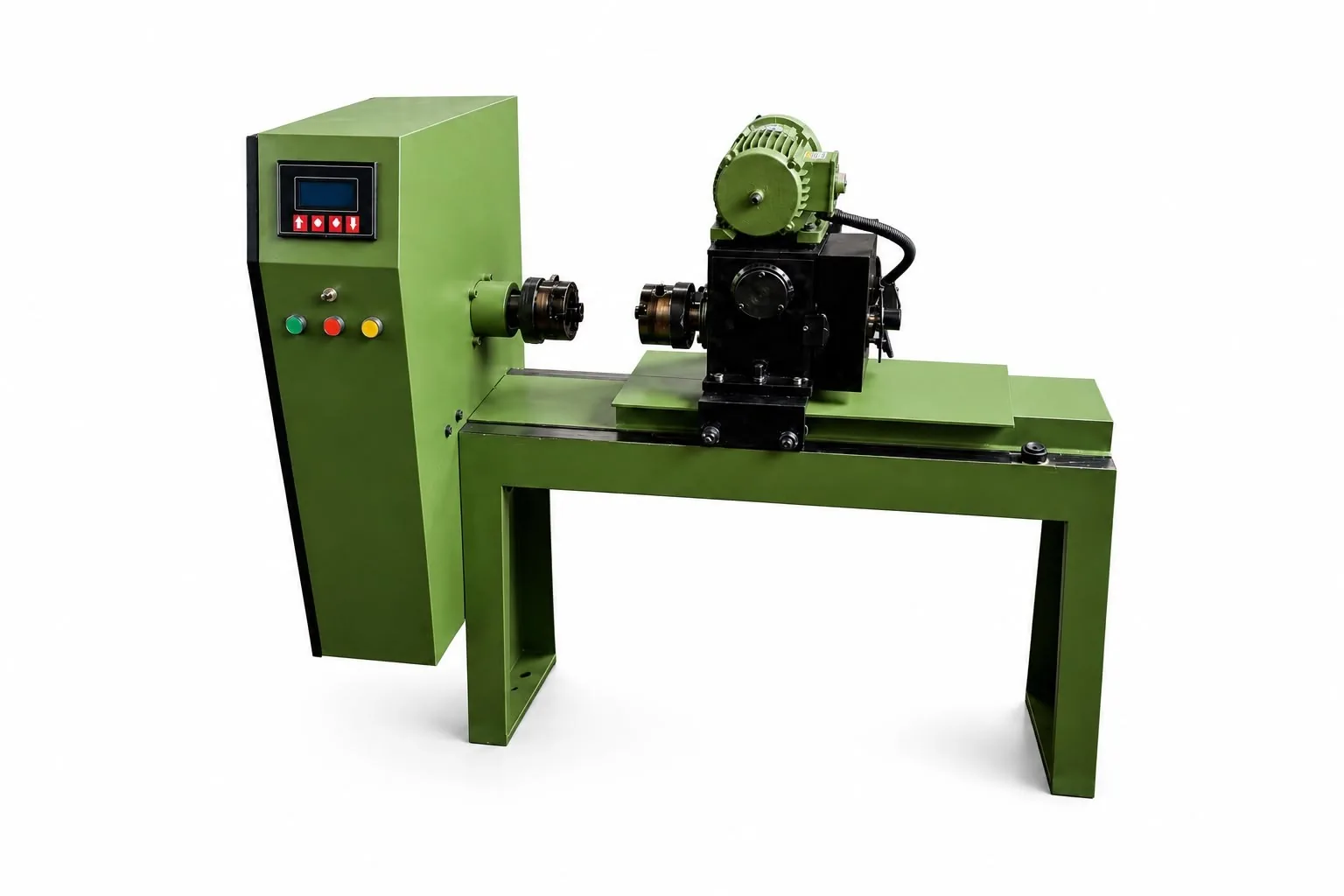
Max. torque capacity: 100 Nm
ASTM E143 – ASTM International standard for materials testing
IS 1717 – Indian Standard for materials testing
ETS-TTM series (digital torsion): models compared side by side, current model highlighted.
| Parameter | ETS-TTM-6(E) | ETS-TTM-10(E) | ETS-TTM-20(E) | ETS-TTM-50(E) | ETS-TTM-100(E) | ETS-TTM-200(E) |
|---|---|---|---|---|---|---|
| Type | Digital torsion testing machine, motorised | Digital torsion testing machine, motorised | Digital torsion testing machine, motorised | Digital torsion testing machine, motorised | Digital torsion testing machine, motorised | Digital torsion testing machine, motorised |
| Max. torque capacity | 60 Nm | 100 Nm | 200 Nm | 500 Nm | 1000 Nm | 2000 Nm |
| Least count | 0.006 Nm | 0.01 Nm | 0.02 Nm | 0.05 Nm | 0.01 Nm | 0.02 Nm |
| Torsion speed | 1.5 rpm | 1.5 rpm | 1.5 rpm | 0.5 rpm | 0.5 rpm | 0.5 rpm |
| Clearance between grips | 0–420 mm | 0–420 mm | 0–420 mm | 0–500 mm | 0–600 mm | 0–1000 mm |
| Round specimen grips | 4–8, 8–12 mm | 4–8, 8–12 mm | 7–10, 10–15, 15–20 mm | 10–17, 17–24, 24–30 mm | 10–18, 18–26, 26–34 mm | 20–30, 30–40, 40–50 mm |
| Flat specimen grips (thickness, width) | 1–5 mm, 25 mm | 2–8 mm, 25 mm | 3–10 mm, 30 mm | 5–12 mm, 40 mm | 5–15 mm, 50 mm | 10–20 mm, 60 mm |
| Display | 20×4 LCD, torque in kgf·m or N·m and angle of rotation | 20×4 LCD, torque in kgf·m or N·m and angle of rotation | 20×4 LCD, torque in kgf·m or N·m and angle of rotation | 20×4 LCD, torque in kgf·m or N·m and angle of rotation | 20×4 LCD, torque in kgf·m or N·m and angle of rotation | 20×4 LCD, torque in kgf·m or N·m and angle of rotation |
| Output | USB (CSV), PC software | USB (CSV), PC software | USB (CSV), PC software | USB (CSV), PC software | USB (CSV), PC software | USB (CSV), PC software |
| Motor | 0.5 HP | 0.5 HP | 0.5 HP | 0.5 HP | 1 HP | 1 HP |
| Power supply | 400–440 V, 3 phase, 50 Hz | 400–440 V, 3 phase, 50 Hz | 400–440 V, 3 phase, 50 Hz | 400–440 V, 3 phase, 50 Hz | 400–440 V, 3 phase, 50 Hz | 400–440 V, 3 phase, 50 Hz |
When your specimens can exceed 60 Nm. Torque rises with the cube of diameter, so a 10 or 12 mm steel rod or a medium fastener can need more than the TTM-6 offers, while the TTM-10 reaches 100 Nm with 0.01 Nm least count. Grips, bed length and 1.5 rpm speed are the same, so the choice is purely about maximum torque.
Round specimens of 4 to 8 mm and 8 to 12 mm diameter, flat specimens 2 to 8 mm thick and up to 25 mm wide, and lengths up to 420 mm between grips set with the sliding tailstock. Typical parts are wire, thin rods, screws, pins and small shafts in steel, non-ferrous alloys and hardened or coated conditions.
Torsional yield and ultimate shear strength from the peak torque and specimen dimensions, shear modulus from the elastic slope per ASTM E143, angle or number of twists at failure as a ductility measure, and pass or fail against the twist requirement of IS 1717 for wire. The stored CSV data can be plotted in Excel or the PC software.
A 20x4 LCD shows torque live in kgf.m or N.m, selectable on the panel, together with the angle of rotation. Both are zeroed before the test starts. Every result is stored with date and time and exported over USB as a CSV file or handled in the ETS PC software for reports.
The TTM-10 is used for shear modulus tests to ASTM E143 and wire torsion tests to IS 1717; the torque system is verified at installation and ETS commissions the machine on site across India. The 0.5 HP motorised drive runs on a 400 to 440 V, three-phase, 50 Hz supply.