 Made in India

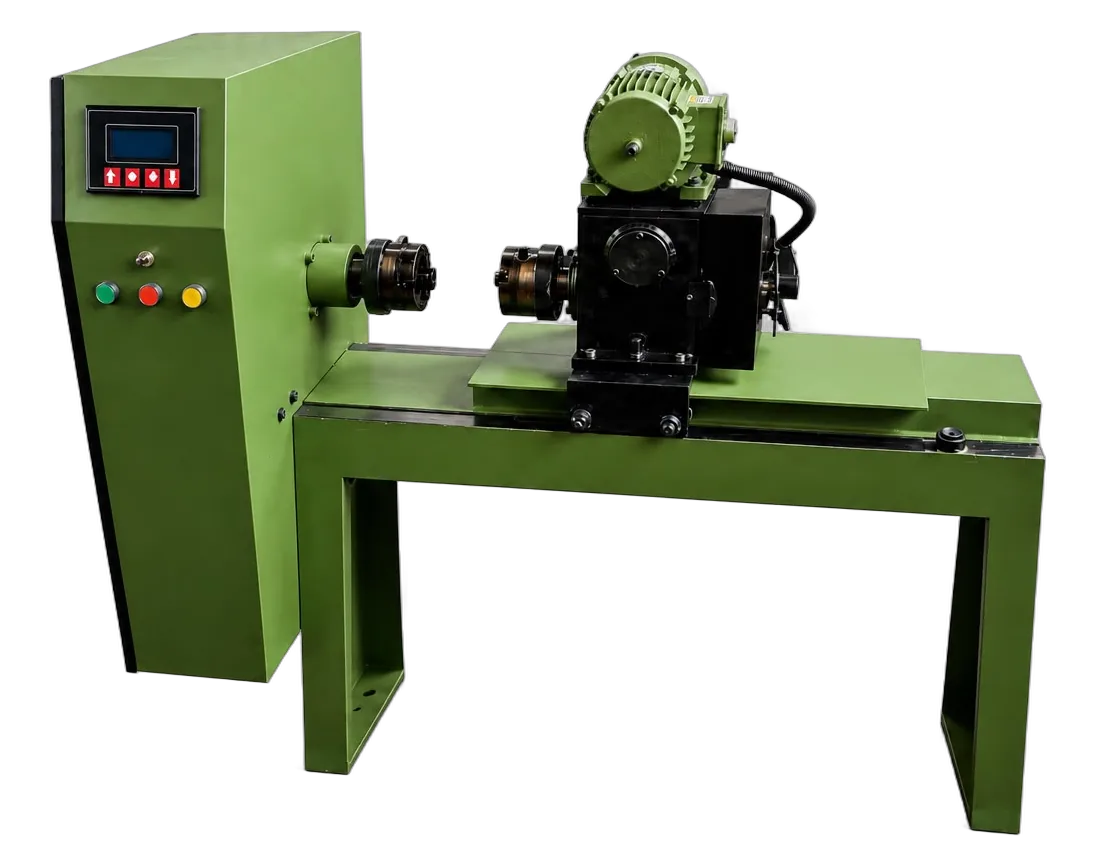
ETS-TTM-100(E)
Digital Torsion Testing Machine, 1000 Nm
ETS-TTM-100(E)
Motorised torsion testing machine of 1000 Nm capacity with digital torque and angle-of-rotation indication on a 20×4 LCD, unit selection in kgf·m or N·m, and storage of results with date and time for CSV export over USB. A 1 HP drive at 0.5 rpm, 600 mm grip clearance and 10 to 34 mm round grips suit bars, shafts and large fasteners.
The ETS-TTM-100(E) is a 1000 Nm digital torsion testing machine from Eklavya Techno Solutions, Ichalkaranji, India, for bars, shafts and large fasteners. A 1 HP drive turns the specimen at 0.5 rpm on a 600 mm bed with sliding tailstock, with round grips for 10 to 18, 18 to 26 and 26 to 34 mm diameters and flat grips for 5 to 15 mm thick, 50 mm wide strips. Torque and angle of rotation are recorded throughout the test, so torsional yield and ultimate shear strength, shear modulus and angle of twist at failure can all be derived from a single specimen.
The TTM-100 serves automotive and off-highway component plants testing propeller shafts, axles, steering components and high-tensile bolts, forging and heat-treatment shops verifying torsional properties after treatment, and material-testing laboratories. Torque, in kgf.m or N.m, and angle appear live on a 20x4 LCD and can be zeroed before each test; every result is stored with date and time for CSV export over USB or reporting in the PC software. The machine runs on 400 to 440 V three-phase and is used for tests to ASTM E143 and IS 1717.
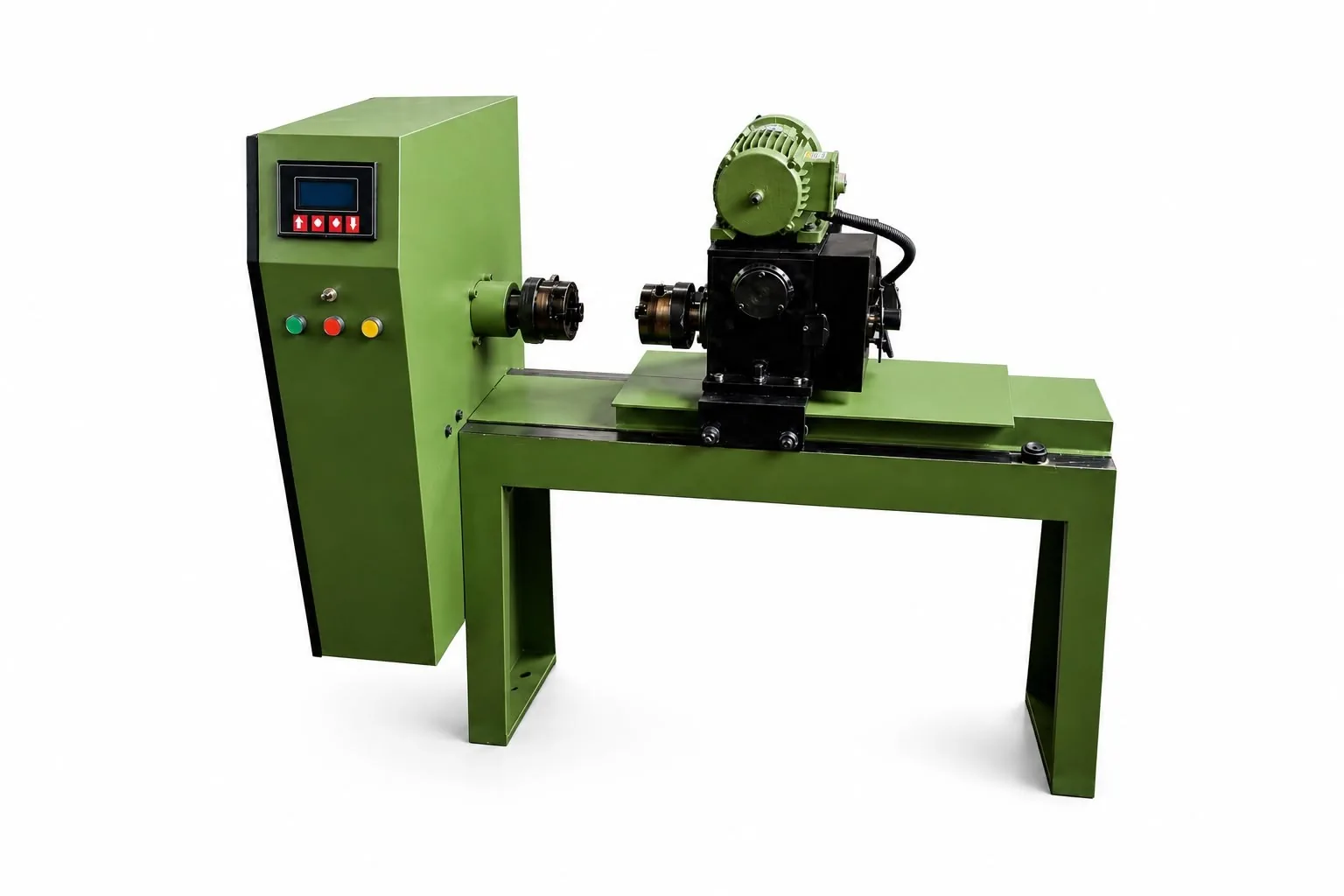
Max. torque capacity: 1000 Nm
ASTM E143 – ASTM International standard for materials testing
IS 1717 – Indian Standard for materials testing
ETS-TTM series (digital torsion): models compared side by side, current model highlighted.
| Parameter | ETS-TTM-6(E) | ETS-TTM-10(E) | ETS-TTM-20(E) | ETS-TTM-50(E) | ETS-TTM-100(E) | ETS-TTM-200(E) |
|---|---|---|---|---|---|---|
| Type | Digital torsion testing machine, motorised | Digital torsion testing machine, motorised | Digital torsion testing machine, motorised | Digital torsion testing machine, motorised | Digital torsion testing machine, motorised | Digital torsion testing machine, motorised |
| Max. torque capacity | 60 Nm | 100 Nm | 200 Nm | 500 Nm | 1000 Nm | 2000 Nm |
| Least count | 0.006 Nm | 0.01 Nm | 0.02 Nm | 0.05 Nm | 0.01 Nm | 0.02 Nm |
| Torsion speed | 1.5 rpm | 1.5 rpm | 1.5 rpm | 0.5 rpm | 0.5 rpm | 0.5 rpm |
| Clearance between grips | 0–420 mm | 0–420 mm | 0–420 mm | 0–500 mm | 0–600 mm | 0–1000 mm |
| Round specimen grips | 4–8, 8–12 mm | 4–8, 8–12 mm | 7–10, 10–15, 15–20 mm | 10–17, 17–24, 24–30 mm | 10–18, 18–26, 26–34 mm | 20–30, 30–40, 40–50 mm |
| Flat specimen grips (thickness, width) | 1–5 mm, 25 mm | 2–8 mm, 25 mm | 3–10 mm, 30 mm | 5–12 mm, 40 mm | 5–15 mm, 50 mm | 10–20 mm, 60 mm |
| Display | 20×4 LCD, torque in kgf·m or N·m and angle of rotation | 20×4 LCD, torque in kgf·m or N·m and angle of rotation | 20×4 LCD, torque in kgf·m or N·m and angle of rotation | 20×4 LCD, torque in kgf·m or N·m and angle of rotation | 20×4 LCD, torque in kgf·m or N·m and angle of rotation | 20×4 LCD, torque in kgf·m or N·m and angle of rotation |
| Output | USB (CSV), PC software | USB (CSV), PC software | USB (CSV), PC software | USB (CSV), PC software | USB (CSV), PC software | USB (CSV), PC software |
| Motor | 0.5 HP | 0.5 HP | 0.5 HP | 0.5 HP | 1 HP | 1 HP |
| Power supply | 400–440 V, 3 phase, 50 Hz | 400–440 V, 3 phase, 50 Hz | 400–440 V, 3 phase, 50 Hz | 400–440 V, 3 phase, 50 Hz | 400–440 V, 3 phase, 50 Hz | 400–440 V, 3 phase, 50 Hz |
Shafts and bars of 18 to 34 mm in alloy or heat-treated steel, high-tensile bolts and studs above M24, axle and steering components and flat bars up to 15 mm thick and 50 mm wide. Torque rises with the cube of diameter, so a 30 mm quenched-and-tempered shaft can exceed the 500 Nm of the TTM-50 well before failure.
The TTM-50 is 500 Nm with 10 to 30 mm grips, a 500 mm bed and a 0.5 HP drive. The TTM-100 doubles that to 1000 Nm with 10 to 34 mm grips, a 600 mm bed and a 1 HP drive. The TTM-200 reaches 2000 Nm with 20 to 50 mm grips and a 1000 mm bed. All three turn at 0.5 rpm.
The torque-angle record gives the torsional yield point, the ultimate shear strength, the shear modulus from the elastic slope per ASTM E143, and the angle of twist at fracture as a measure of ductility. The fracture appearance also distinguishes ductile shear failure from brittle tensile-type failure, which is useful after heat treatment.
A 20x4 LCD shows torque in kgf.m or N.m and the angle of rotation live until the specimen fails; both are zeroed before the test. Every result is stored with date and time and exported over USB as a CSV file for Excel, or handled in the ETS PC software for reports and printing. See the specification table for the least count.
The TTM-100 is used for tests to ASTM E143 and IS 1717 and its torque measuring system is verified at installation, with ETS commissioning the machine on site across India. The 1 HP motorised drive requires a 400 to 440 V, three-phase, 50 Hz supply.